Editor’s note (April 2026): This article is part of the Blog Herald’s editorial archives. Originally published in January 2009, it has been revised and updated to ensure accuracy and relevance for today’s readers.
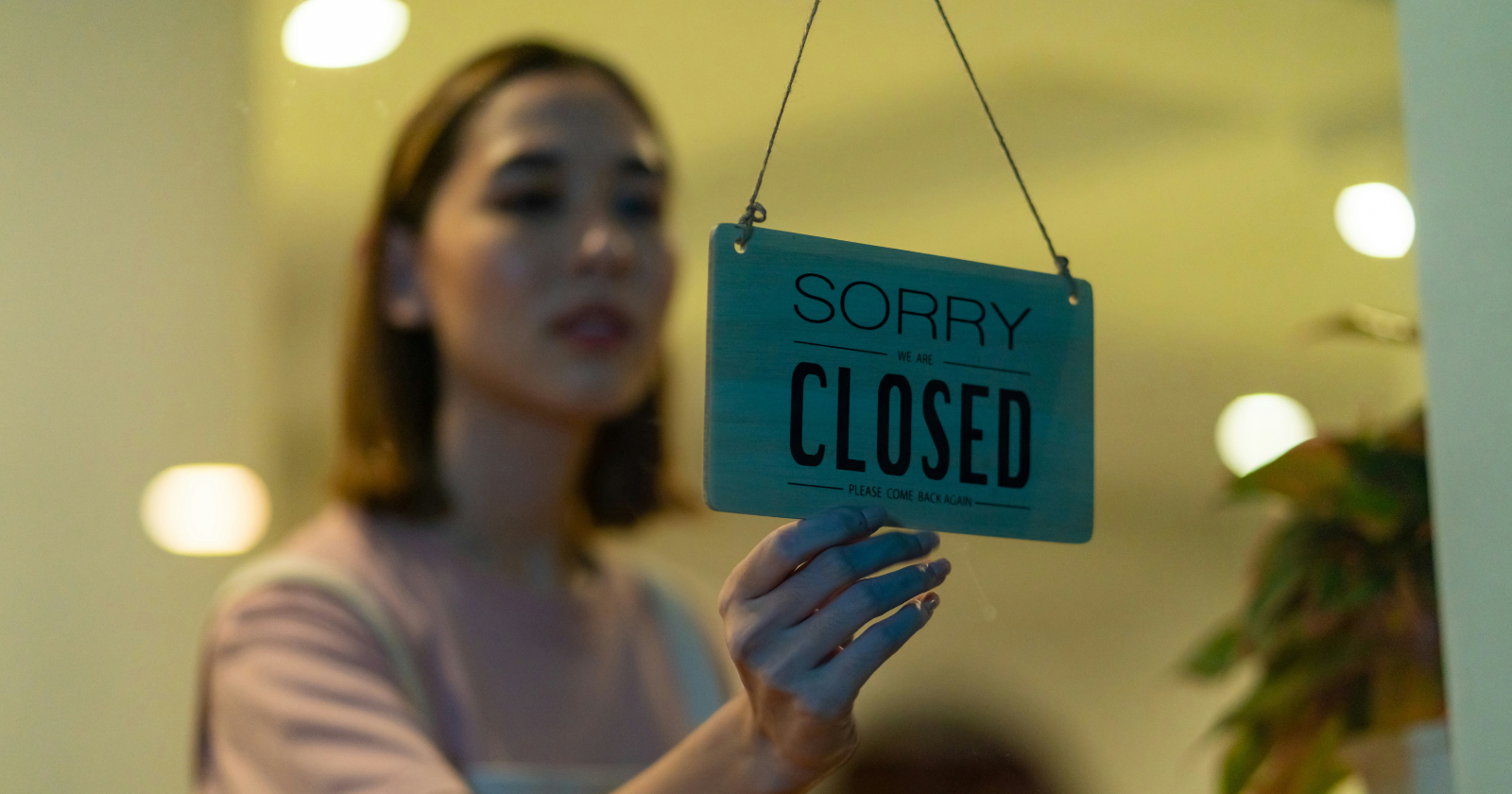
In early 2009, a short email from a co-founder changed the financial reality for hundreds of bloggers overnight. Pajama Media Advertising Network was closingeffective from March 31. For bloggers who built part of their income — or in some cases all of their income — around that quarterly payment, the announcement fell like a trap door beneath them.
The network was paying even when it wasn’t generating revenue. This fact, which co-founder Roger L. Simon finally made public, re-circulated the whole story. The checks bloggers received weren’t advertising revenue—they were, in Simon’s words, a “stipend,” a subsidy the company extended in the hope that the blog advertising market would eventually catch up. It didn’t happen. And when the money stopped, so did some blogs.
What happened to Pajama Media is not a record from early internet history. It’s a case study in a problem that never goes away: what happens when a creator builds their livelihood on a foundation controlled by someone else.
What the Pajama Media experience was really about
Pajama Media launched in 2005 with an ambitious goal: to connect a network of conservative bloggers, bring in serious advertising revenue, and give independent writers a financially viable alternative to the major networks. The founders — Roger L. Simon and Charles Johnson of Little Green Footballs — have raised $3.5 million in venture capital and assembled a roster that includes notable voices like Instapundit’s Glenn Reynolds.
The ideological angle was clear. The network positioned itself as an alternative to “liberal” advertising options such as Google AdSense, Yahoo Publisher and Microsoft Ads. This framing gave it a political identity, but also narrowed its appeal to advertisers—a structural problem baked in from the start.
The rates paid to bloggers were reportedly $4-$7 CPM regardless of whether the advertisers actually filled that inventory. The model was essentially a bet on future advertiser demand that never materialized. When the company pivoted to web video—launching Pajama TV—the ad network became a liability, not an asset, and it was canceled.
The impact was immediate. Some bloggers have made it clear that they will have to shut down or drastically reduce their output. Others have made efforts to set up alternative monetization before April 1. A few begged for company. Simon’s response—describing the payments as welfare and the complaining bloggers as “good”—turned the business closure into a public rift.
A structural lesson that doesn’t get enough attention
The dominant narrative at the time was that the conservative media was losing its financial lifeline. That’s true, but it’s a smaller lesson. The bigger one is about what it means to build a creative business on someone else’s infrastructure.
Pajama Media was a platform in a sense. He aggregated audiences, managed advertising relationships, and distributed revenue to bloggers who built around him. When these bloggers shut down, not only did they lose their income, but they also discovered how little control they actually had over their finances.
It’s a dynamic that has been repeated time and time again since then. Ad networks are being dismantled or rebuilt. Platforms change the terms of revenue sharing. Traffic sources dry up after algorithm updates. Monetization functions sunset without warning – for example, Facebook announced that in 2025 the Ad Breaks program will be completely discontinued. The pattern is consistent: creators build, platforms change, and creators embrace disruption.
What Pajama Media bloggers experienced in 2009 was a glimpse into the larger situation that now defines much of independent digital publishing.
Platform dependency is still a defining risk
The creative economy has grown tremendously since 2009. The market is estimated to be over $200 billion in 2024, and individual creators now generate a significant portion of that revenue. But the key weakness exposed by Pajamas Media—reliance on a single revenue source or middleman—remains one of the most overlooked risks in independent publishing.
Research consistently shows the difference between creators who have a relationship with their audience and creators who don’t. Research on creator monetization in 2025 found that creators who own an audience—primarily through the email lists they control—are more than twice as likely to reach a meaningful revenue threshold than those who rely entirely on the platform. An email list is still the closest thing to a portable, durable asset in digital publishing in the most practical sense.
This idea did not exist in the same form in 2009. But the bloggers who recovered most quickly from the closure of Pajamas Media were those who had other sources of income: direct sponsorships, affiliate deals, or audiences they developed independently of the network. Those who struggled the most were those for whom the quarterly PJM check had become a major dependency.
Why bloggers still repeat this mistake
It’s easy to look back on the Pajama Media situation and think that the bloggers involved should have seen the risk coming. But the conditions that make it feel safe are the same as those that exist on every platform today. The payments were consistent. The relationship felt established. Diversification would require seemingly unnecessary effort and uncertainty while things are running.
It’s the same logic that makes bloggers over-rely on Google AdSense, or build entirely around a single social platform’s algorithm, or treat a brand sponsorship deal as a substitute for a sustainable business model. Risk feels abstract when things work. It happens when it is too late to prepare for it.
The plight of Pajama Media revealed something about the economics of blog advertising in particular. Display advertising revenue has always been a small margin for independent publishers. CPM rates offered in 2009 were low even by the standards of the time, and the broader advertising market for blogs has since become more competitive and fragmented. Publishers that have built sustainable businesses since then have almost always done so by moving beyond display advertising—to subscriptions, memberships, digital products, or direct reader relationships independent of advertiser spending cycles.
What it still means for independent publishers
The Pajama Media story ended with the network itself surviving in a different form – eventually becoming PJ Media, which was acquired by Salem Media Group in 2019. But the ad network and the financial structure it represented for hundreds of bloggers is gone forever.
The lesson is not that ad networks are inherently unreliable, or that ideologically motivated media enterprises are doomed, or even that the blog advertising market was never reliable. The lesson is simpler: any source of income you don’t control should be treated as a supplement, not a primary.
This means building an email list before you need it. This means diversifying monetization across multiple channels. It means realizing how much of your income depends on a single decision someone else makes, and asking yourself if that decision changed tomorrow, would you be able to make that decision?
Bloggers who received that email from Roger L. Simon in January 2009 had about sixty days to figure out a different plan. Most of them didn’t have to think about it before. The gap between comfort and unpredictability is still where most independent publishers live – and the closure of Pajama Media is one of the starkest examples yet of what this gap is costing.